

 中文简体
 English
 русский
 عربى


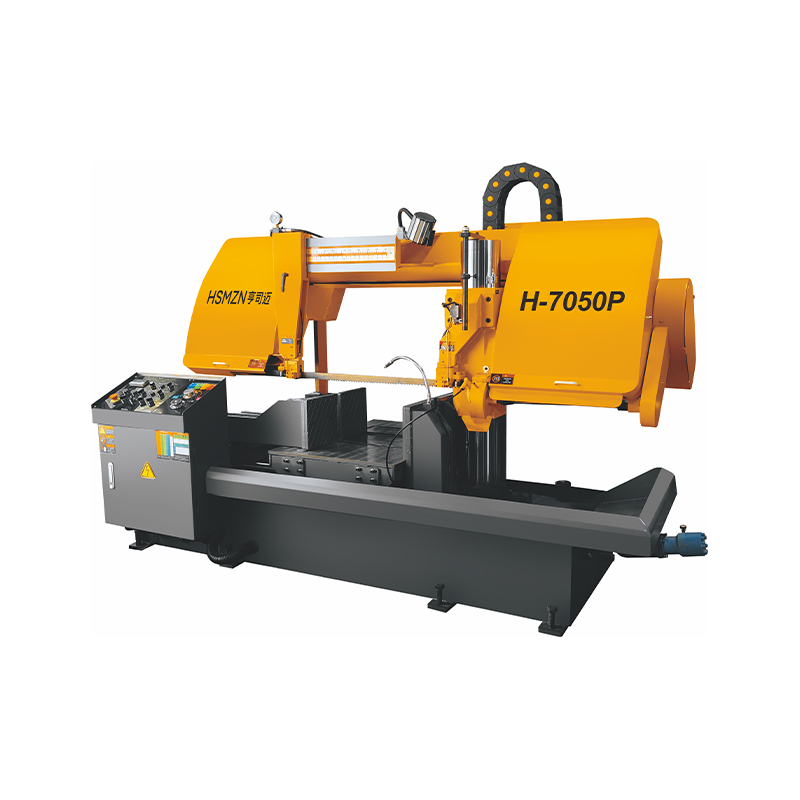
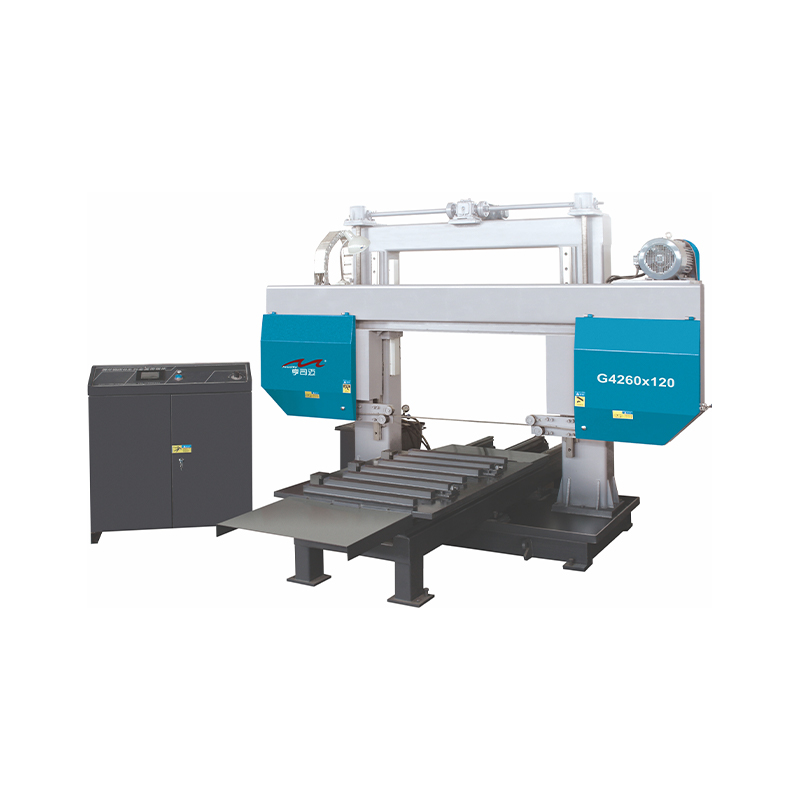
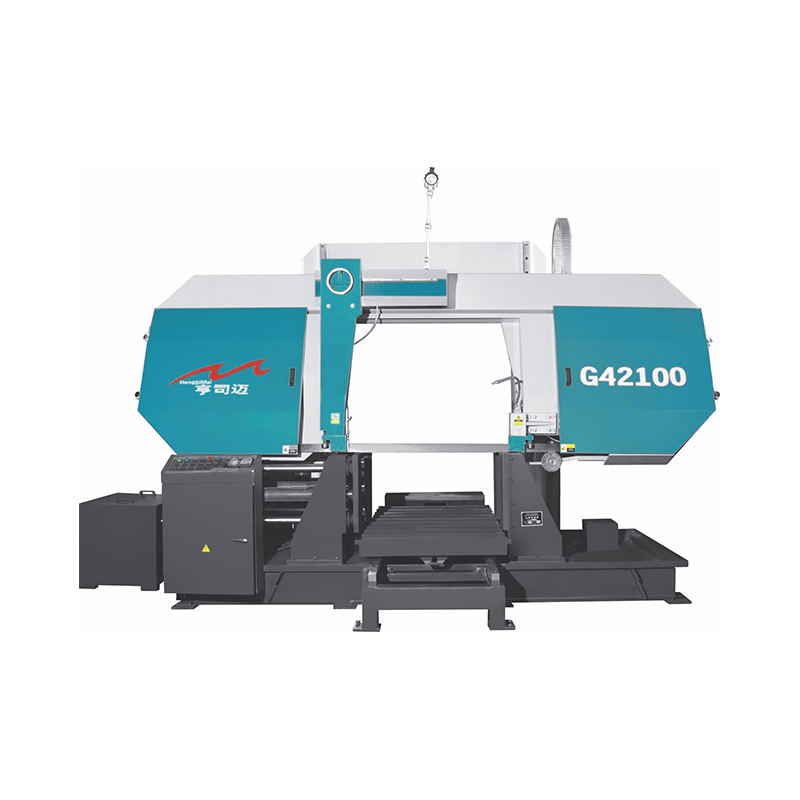
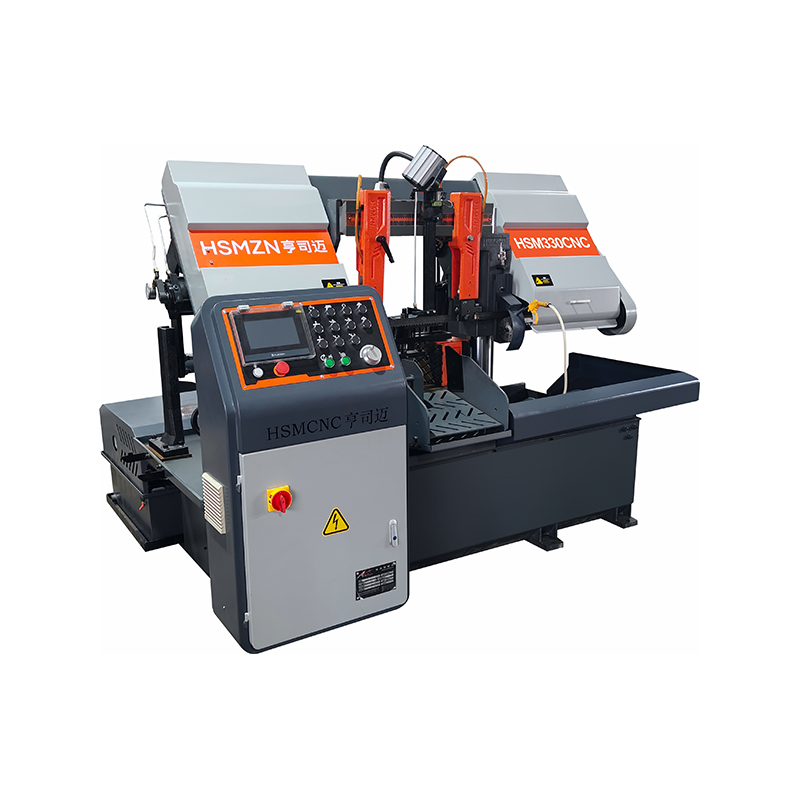
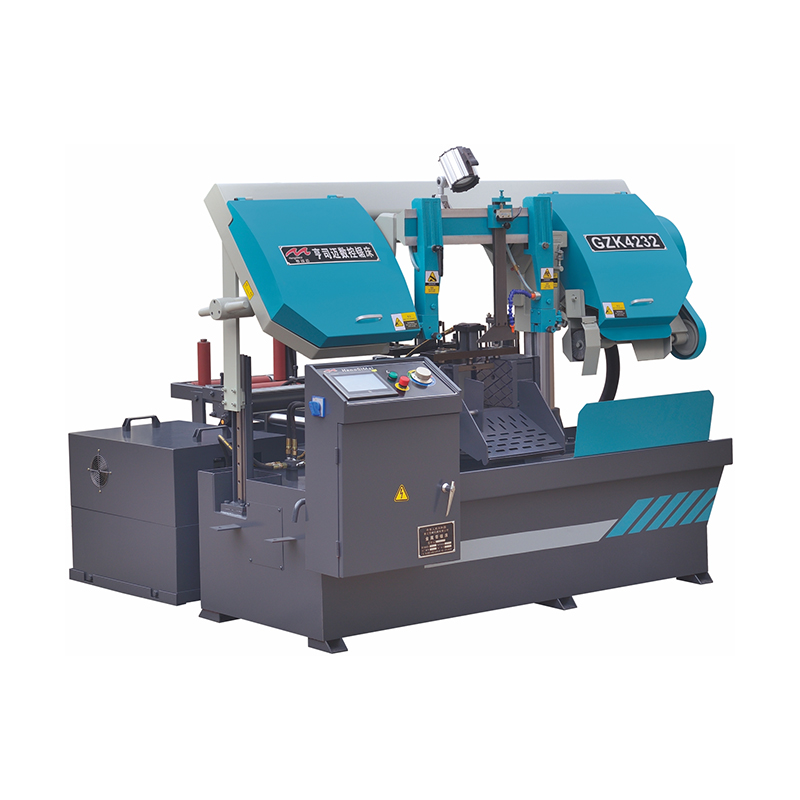
A saw blade has no idea what a drawing shows. It goes wherever the forces on it send it, and on a thin band of steel those forces are many. A High Precision Vertical Band Saw is the result of removing, one by one, the small movements that push the blade off its line. Zhejiang Hengsimai Intelligent Machinery Co., Ltd. builds vertical band saw machines alongside its horizontal and circular saws, with rigid frames, precision guide rails and stable blade drives as the basis for accurate cutting.
Where the Error Gets In
A band blade is wide and thin, so it resists bending in one direction and gives easily in the other. Under cutting load it can lean to one side, twist a little along its length, or wander as the teeth meet a hard spot in the metal. Each of these shows up on the workpiece as a cut face that is out of square, a surface with ripples, or a dimension that changes between the start and the end of the cut.
The motor does not cause these faults, and a bigger motor does not cure them. They come from how the blade is held, so the construction around the blade counts for more than the power rating of a High Precision Vertical Band Saw.
Guides and Tension Keep the Blade on Its Line
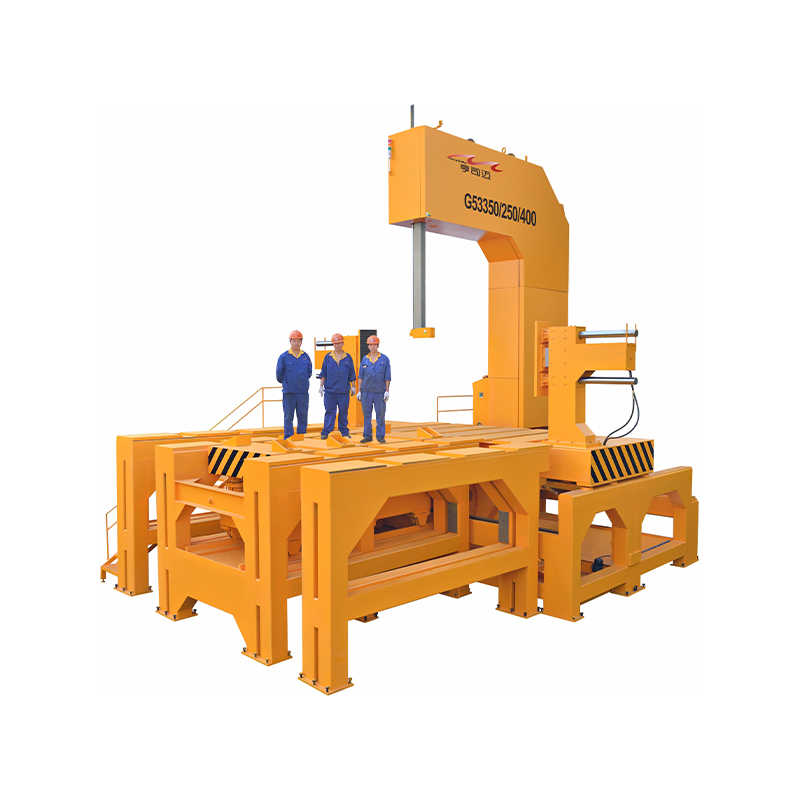
Blade guides sit either side of the work and keep the cutting section of the blade straight. Worn or loose guides allow sideways movement, and guides set too tight heat the blade. Precision guide rails on the Hengsimai machines hold the sliding parts to a path that does not shift, so a High Precision Vertical Band Saw presents the blade to the metal at the same angle from one cut to the next.
Tension is the other half of a High Precision Vertical Band Saw. A blade that is slack flutters and wanders, while one that is over-tensioned fatigues and breaks. A stable blade drive keeps the speed even through the cut, so the load on the teeth does not surge when the blade enters a thick section. Behind all of this stands a rigid frame, because a frame that flexes under cutting force moves the guides, and the blade moves with them.
A Table That Tilts and Turns
Not every cut is square. Gussets, brackets, angle pieces and shaped plates call for bevels and irregular outlines. On a vertical machine the workpiece rests on a table, so the cut angle is set by moving the table: rotating or tilting it presents the metal to the blade at the angle the drawing asks for.
The operator can see the line being cut and guide the piece along it. For a High Precision Vertical Band Saw the table has to be flat, locked firmly at each angle and free of play when it is turned, since any rock in the table becomes a variation in the cut.
Chips Fall Differently on an Upright Machine
Chips are the quiet enemy of accuracy. If they pack into the kerf or ride along the blade, they scratch the surface and heat the teeth. On a vertical saw, gravity helps: chips drop down and away from the cut as the blade runs, and cutting fluid drains in the same direction. Clean fluid and prompt chip removal keep the blade cool and the cut face smooth, which matters on parts that go on to machining.
Watching the Blade Instead of Guessing
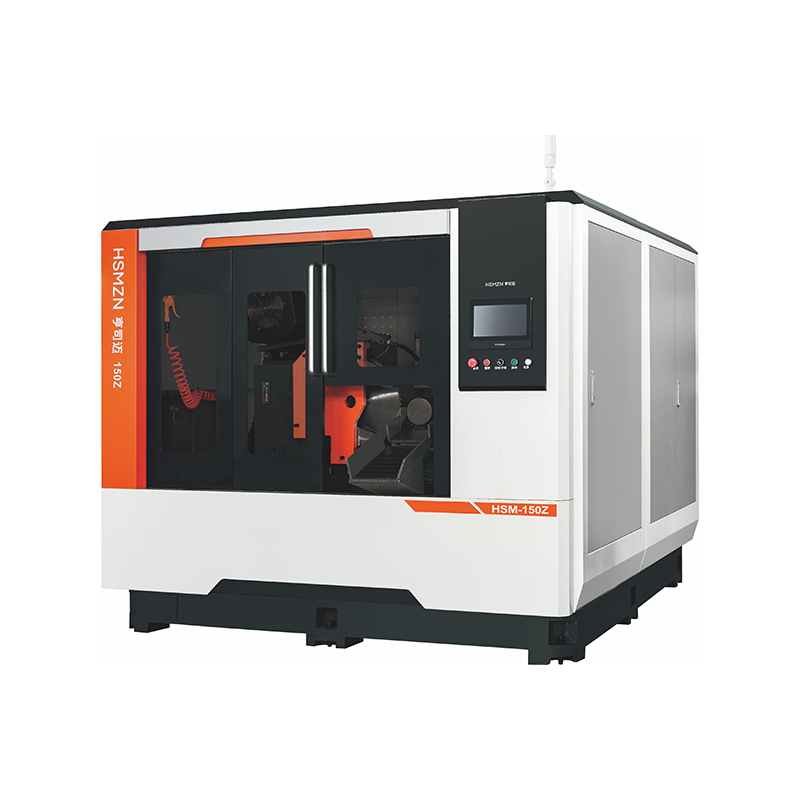
A blade on a High Precision Vertical Band Saw wears gradually, and a worn blade cuts badly well before it breaks. CNC control on the Hengsimai range handles automatic feeding and sets length and angle precisely, and monitoring of cutting progress and blade condition shows when wear is starting to affect the cut. The machine also carries sensors that stop the cycle on a jam, an overload or abnormal vibration, so a fault does not turn into a ruined workpiece or a snapped blade.
That feedback also helps with repeat work. When the same part is cut through a long run, a High Precision Vertical Band Saw with steady feed, tight guides and a monitored blade produces pieces that match from the opening part to the final one, with less trimming and rework.
A square, flat cut face needs less milling, a true angle saves fitting, and a consistent length lets parts go straight into welding or assembly. All of that is settled at the blade.




 +86-13905781129 (wechat) / +86-18767832868
 +86-0578-3559058
