

 中文简体
中文简体
 English
  русский
  عربى
عربى 

In older workshops, operators often judged cutting quality mainly by experience.
A skilled worker could hear slight changes in blade sound, feel vibration through the machine frame, and manually adjust feeding speed depending on how the material reacted during cutting. Two operators using the same saw sometimes produced very different surface finishes simply because their cutting rhythm was not the same.
That difference became more obvious once production volumes increased.
The arrival of the CNC circular saw machine changed more than automation itself. In many factories, it changed how cutting consistency was controlled from one batch to the next.
Actually, some manufacturers adopted CNC systems not to increase speed, but to reduce variability between operators.
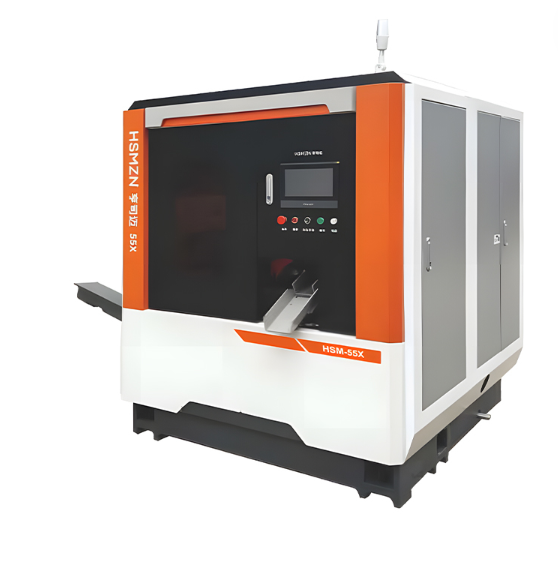
Feeding Stability Affects Blade Behavior
One detail often underestimated in metal cutting is feeding consistency.
With manual operation, slight hesitation or uneven pushing pressure may cause the blade load to fluctuate continuously. Inside a CNC circular saw machine, the feeding movement becomes controlled through programmed motion rather than operator feel alone.
This matters because circular saw blades react very sensitively to changing resistance during cutting.
Unstable feed movement may bring about:
- rough cut surfaces
- edge burrs
- blade wandering
- excessive vibration
- uneven tooth wear
Actually, smoother feeding sometimes improves cut quality more than increasing blade speed itself.
Different Materials React Differently To Cutting Heat
A CNC circular saw machine does not simply rotate faster than older systems.
The machine also helps maintain more stable cutting conditions once material hardness changes between batches. Stainless steel, aluminum, carbon steel, and alloy materials all generate heat differently during cutting.
In manual operations, experienced workers often adjust instinctively after hearing the blade begin loading unevenly.
CNC-controlled systems instead rely on programmed consistency to reduce sudden changes in:
feed resistance
blade pressure
cutting temperature
tooth impact force
material deformation
Actually, some thin-wall materials become harder to cut cleanly when feeding speed changes too aggressively.
Vibration Often Starts Before The Surface Looks Bad
Inside metal processing workshops, vibration problems rarely appear suddenly.
Operators sometimes hear subtle sound changes long before visible defects develop on the material surface. A CNC circular saw machine helps reduce this because the cutting movement remains more uniform throughout the process.
That becomes especially important when processing:
bundled tubing
solid steel bars
thick-wall pipe
precision alloy material
repeated production batches
Actually, inconsistent cutting rhythm often shortens blade life even before obvious quality problems appear.
Blade Life Depends On More Than Blade Quality
Many buyers focus heavily on blade material itself.
Inside real production environments, however, blade lifespan also depends on machine stability. A CNC circular saw machine reduces sudden loading changes that normally occur during manual feeding or inconsistent clamping conditions.
Over time, stable cutting behavior may reduce:
- uneven tooth wear
- thermal stress
- side friction
- blade deflection
- excessive sharpening frequency
Actually, some workshops improve blade lifespan significantly without changing blade suppliers at all.
Repeatability Matters In Batch Production
For small workshops, slight cutting differences may not create major problems.
In larger manufacturing environments, repeated dimensional consistency becomes far more important. A CNC circular saw machine helps maintain stable cutting cycles across long production runs where manual adjustment alone becomes difficult to repeat precisely.
This becomes critical in industries producing:
- automotive components
- structural tubing
- machinery parts
- industrial fittings
- fabrication assemblies
Actually, many factories care less about cutting speed than about reducing variation between thousands of repeated cuts.
CNC Changed How Operators Work With Machines
People outside manufacturing sometimes assume CNC technology removes operator involvement completely.
Inside workshops, experienced workers still monitor blade sound, chip condition, vibration behavior, and material response carefully. The difference is that a CNC circular saw machine handles movement consistency while operators focus more on process stability and cutting condition management.
The difficult part is no longer simply pushing material through a blade.
It is maintaining stable cutting behavior across different materials, long production hours, and repeated batches where even small variations eventually affect quality, blade wear, and downstream machining accuracy.



 +86-13905781129 (wechat) / +86-18767832868
  +86-0578-3559058
