

 中文简体
中文简体
 English
  русский
  عربى
عربى 

A vertical circular saw machine is often evaluated by cutting capacity, blade size, or production efficiency. Yet in many fabrication shops, experienced operators develop a habit that seems unrelated to any specification sheet.
They walk around the machine.
Not because something is wrong, but because different viewpoints can reveal things that are easy to miss when standing in a single position. Over time, many operators learn that the cutting process tells a story through movement, sound, and material behavior long before a measurement report is printed.
The Material Often Shows Signs First
When a vertical circular saw machine is running normally, operators rarely stare directly at the blade throughout the entire cut.
Instead, they watch the material.
A long metal tube, bar, or profile can sometimes reveal subtle changes before the machine itself does. Slight movement near the support area, unexpected vibration, or a different feed behavior may indicate that something has changed in the setup.
None of these observations automatically mean there is a problem. However, experienced operators know that material behavior often provides useful clues about what is happening during the cutting process.
This is one reason machine monitoring involves more than checking dimensions after the cut is complete.
Sound Changes Before Measurements Do
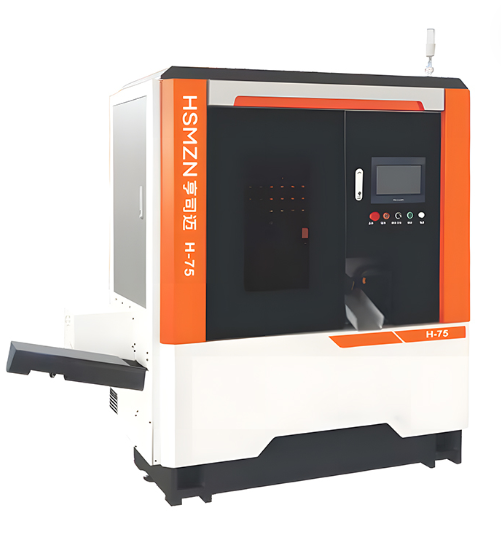
Ask someone who has worked around a vertical circular saw machine for several years, and they will often mention sound.
Not because they are relying on guesswork, but because machines tend to develop recognizable operating patterns.
A slightly different cutting tone may come from the material itself. Sometimes it comes from feed conditions. In other cases, it simply reflects a change in how the blade is interacting with the workpiece.
The interesting part is that these changes can appear long before any measurable difference shows up on the finished component.
That is why operators often pay attention to what they hear as well as what they see.
Different Materials Create Different Cutting Behavior
A vertical circular saw machine may process a wide range of materials during a normal production week.
Even when dimensions are similar, materials can behave very differently once cutting begins. Some generate a steady cutting action, while others produce chips, resistance, or vibration patterns that require closer observation.
Because of this, experienced operators rarely assume that yesterday's settings will automatically produce the same results today.
The machine remains the same.
The material does not.
Visibility Influences Decision Making
One reason many facilities use a vertical circular saw machine is the way it positions the cutting area.
The layout often allows operators to observe both the workpiece and machine movement more easily from multiple angles. During setup, this visibility can help identify alignment issues, support concerns, or handling challenges before production begins.
Actually, some adjustments are made simply because an operator noticed something unusual while viewing the process from a different position around the machine.
The observation may take only a few seconds, but it can prevent unnecessary interruptions later.
Experience Often Comes From Repetition
People sometimes assume machine operation is mainly about controls and settings.
In reality, much of the knowledge surrounding a vertical circular saw machine comes from repeated observation. Operators see how different materials react, how setups influence cutting behavior, and how small changes can affect the overall process.
After hundreds or thousands of cutting cycles, patterns begin to emerge.
The machine starts teaching lessons that are difficult to find in manuals.
Good Cutting Is Usually Quietly Predictable
When production runs smoothly, a vertical circular saw machine rarely attracts attention.
Materials move as expected. Operators follow established procedures. Finished parts meet requirements. Nothing dramatic happens.
Ironically, that predictability is often what experienced workshops value most.
The goal is not simply making a cut.
It is creating a process where operators can recognize small changes early, make adjustments when necessary, and keep production moving without surprises.



 +86-13905781129 (wechat) / +86-18767832868
  +86-0578-3559058
