

 中文简体
 English
 русский
 عربى


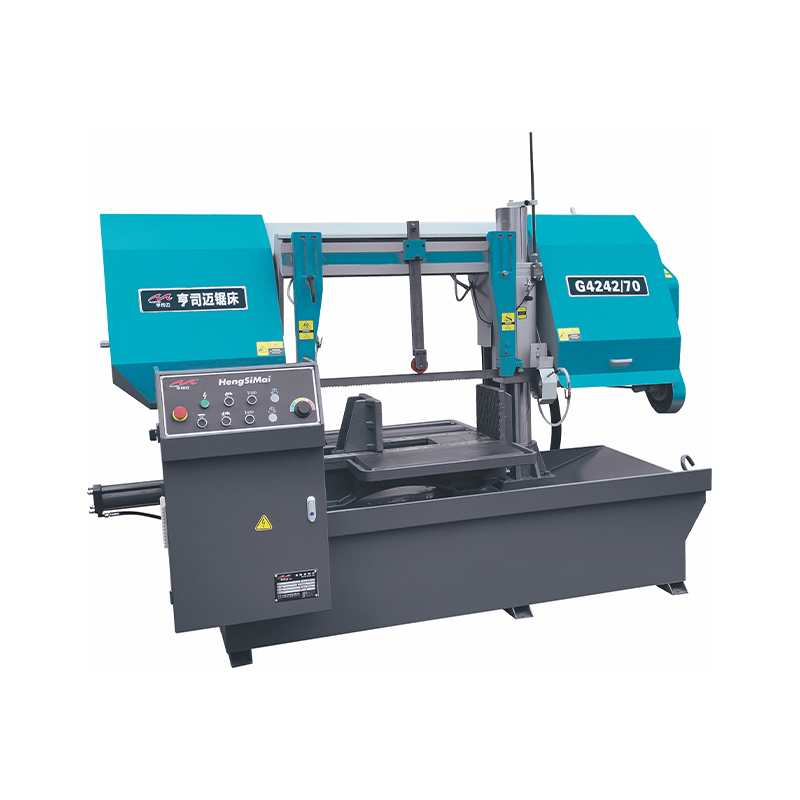
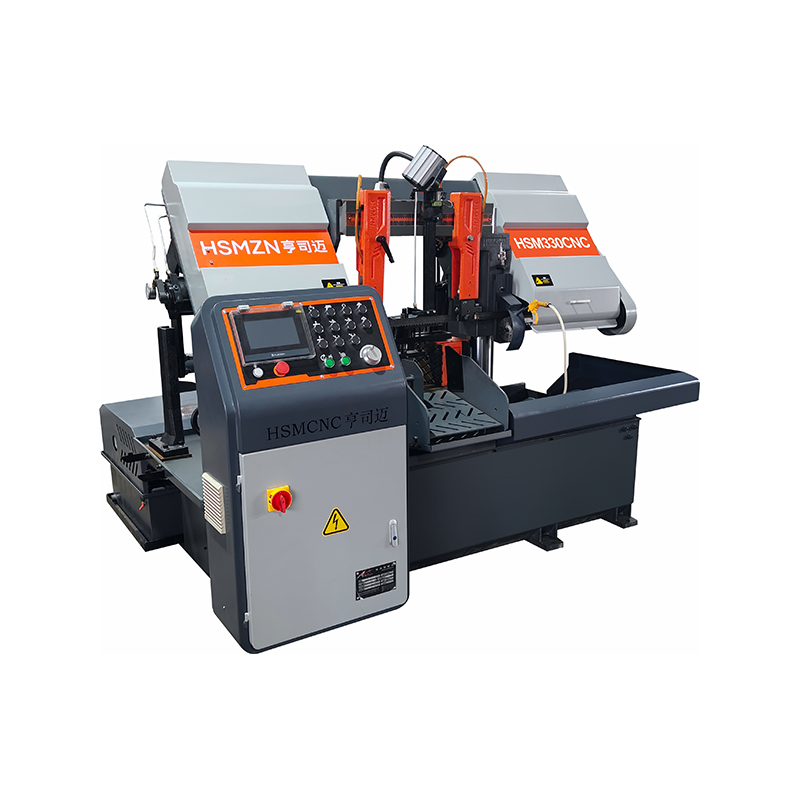
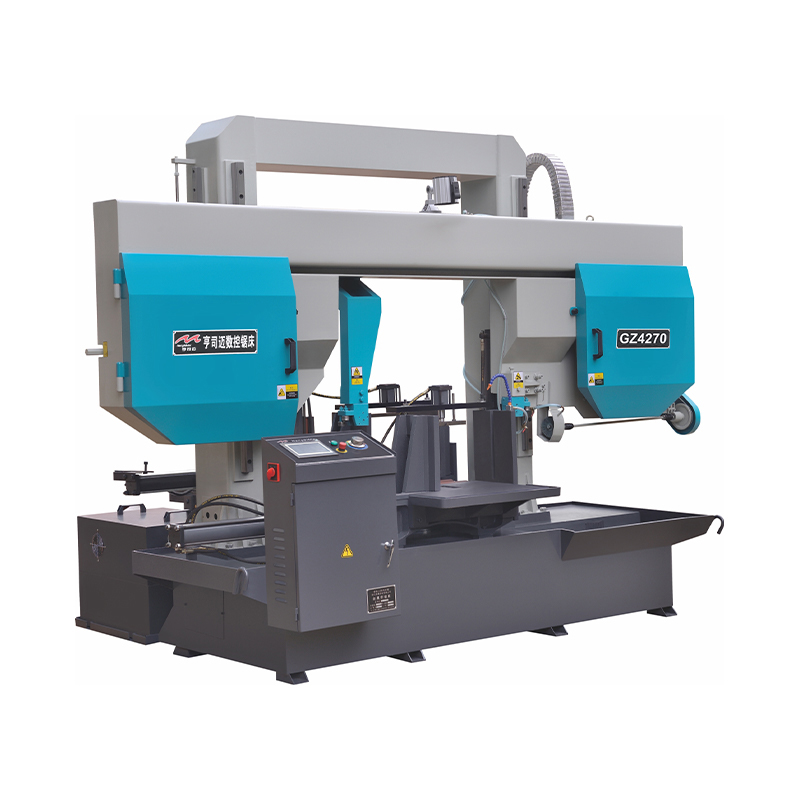
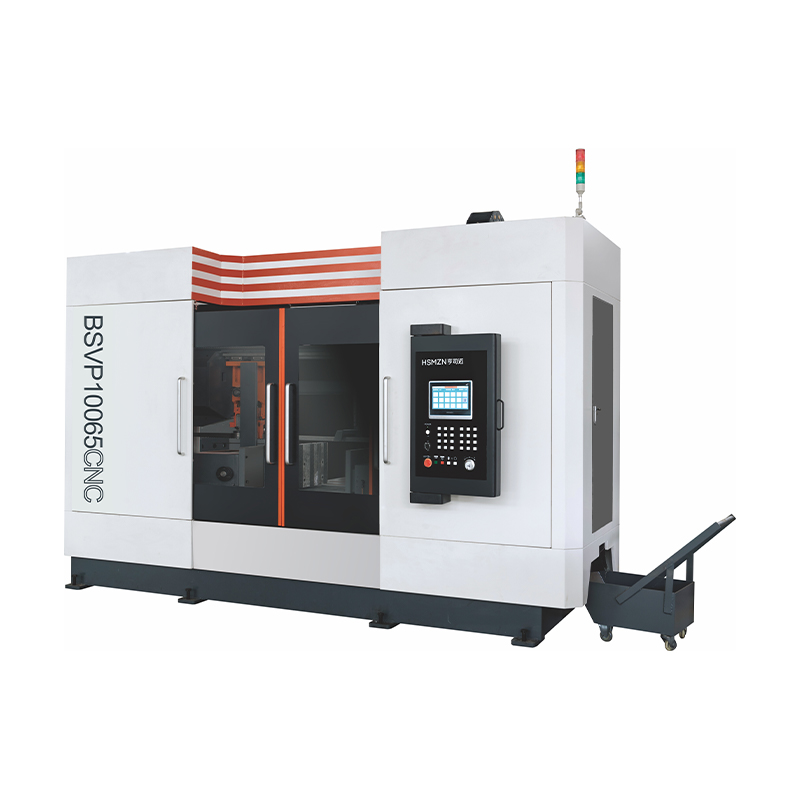
A Precision Industrial Band Saw Machine makes a single cut in four moments, and each one has its own way of going wrong: the blade enters the bar, travels through it, breaks out on the far side and returns for the next piece. Following one cut through those moments shows where accuracy is made and where it quietly slips away.
Moment One: The Blade Meets the Bar
Gripping a curved or hard surface
Before the blade touches metal, the bar is already clamped. Hydraulic vises hold it with even pressure, because a bar that shifts at the moment of contact cannot be cut square. A round bar presents a curved surface, and the teeth must bite without skidding sideways. Light feed pressure at the entry gives each tooth time to cut a clean groove, and that groove guides the blade for the rest of the cut.
Setting speed for the material
Blade speed decides how the teeth behave once they bite. Aluminum and copper alloys cut well at higher speeds, while stainless and alloy steels need slower ones. A variable range, such as 15 to 70 meters per minute, lets the operator match the speed to the bar instead of settling for a compromise. A Precision Industrial Band Saw Machine that runs at the right speed cuts straighter and keeps its blade sharp for longer.
Moment Two: The Blade Travels Through
Chips and coolant
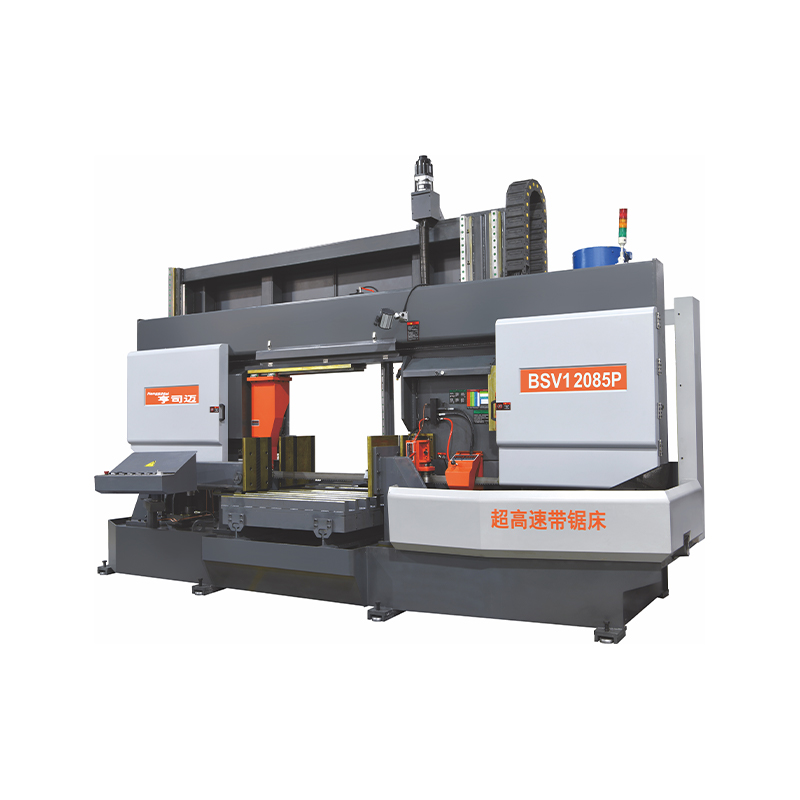
Midway through the cut, the blade is working hardest. Heat builds at the teeth and chips pack into the kerf. Coolant carries heat away and flushes chips out, while brushes or a conveyor clear them from the table. Chips left in the cut scratch the surface and push the blade off its line, so a Precision Industrial Band Saw Machine treats chip removal as part of accuracy, not housekeeping.
Feed pressure
The feed must push the blade through at a steady rate. Too much pressure bends the blade and leaves a curved cut, and too little rubs the teeth without cutting and dulls them. Hydraulic feed adjusts pressure smoothly, while a ball screw feed gives fine control over position. Either way, a steady feed keeps the cut of a Precision Industrial Band Saw Machine flat from one end of the bar to the other.
Moment Three: The Blade Breaks Out
As the blade nears the bottom of the bar, the remaining material gets thin and can flex. The feed eases off, because a heavy push at this point tears a burr along the edge or chips the last of the metal. The cut-off piece must be supported so that it does not drop or twist before the blade clears it. A saw that handles breakout well leaves an edge that needs little finishing, which saves time at the next machine. This is where a Precision Industrial Band Saw Machine shows its character.
Moment Four: The Saw Resets
Once the cut is complete, the blade returns, the vise releases and the feed moves the bar forward to the next length. Digital length setting in 0.1 mm steps lets that move repeat closely, but every cycle adds a tiny amount of wear to the feed and the clamps. On a Precision Industrial Band Saw Machine, pieces that are a fraction of a millimeter off at the hundredth cut usually trace back to this moment.
A PLC with a touch screen records what the saw is doing and flags changes in cutting behavior early. Automatic shutdown on blade breakage or jamming stops a damaged blade from ruining the workpiece, so a precision band saw machine that runs for hours without attention has protection built into the reset as well as the cut.
Why the Hundredth Cut Matters
One good cut proves little. A saw that handles entry, travel, breakout and reset the same way every time produces pieces that match from the opening bar to the final one, and that repeatability is what machinery makers, steel processors and rail parts shops rely on. An industrial precision band saw earns its name through the sum of those four moments, repeated hundreds of times a shift, and a Precision Industrial Band Saw Machine that keeps all four under control keeps its tolerance all day.



 +86-13905781129 (wechat) / +86-18767832868
 +86-0578-3559058
